belladonna
When: March 23, 10am-12ish
Where: Ookwe Park S 27th st, Richmond
Who: “Deadly Nightshade”
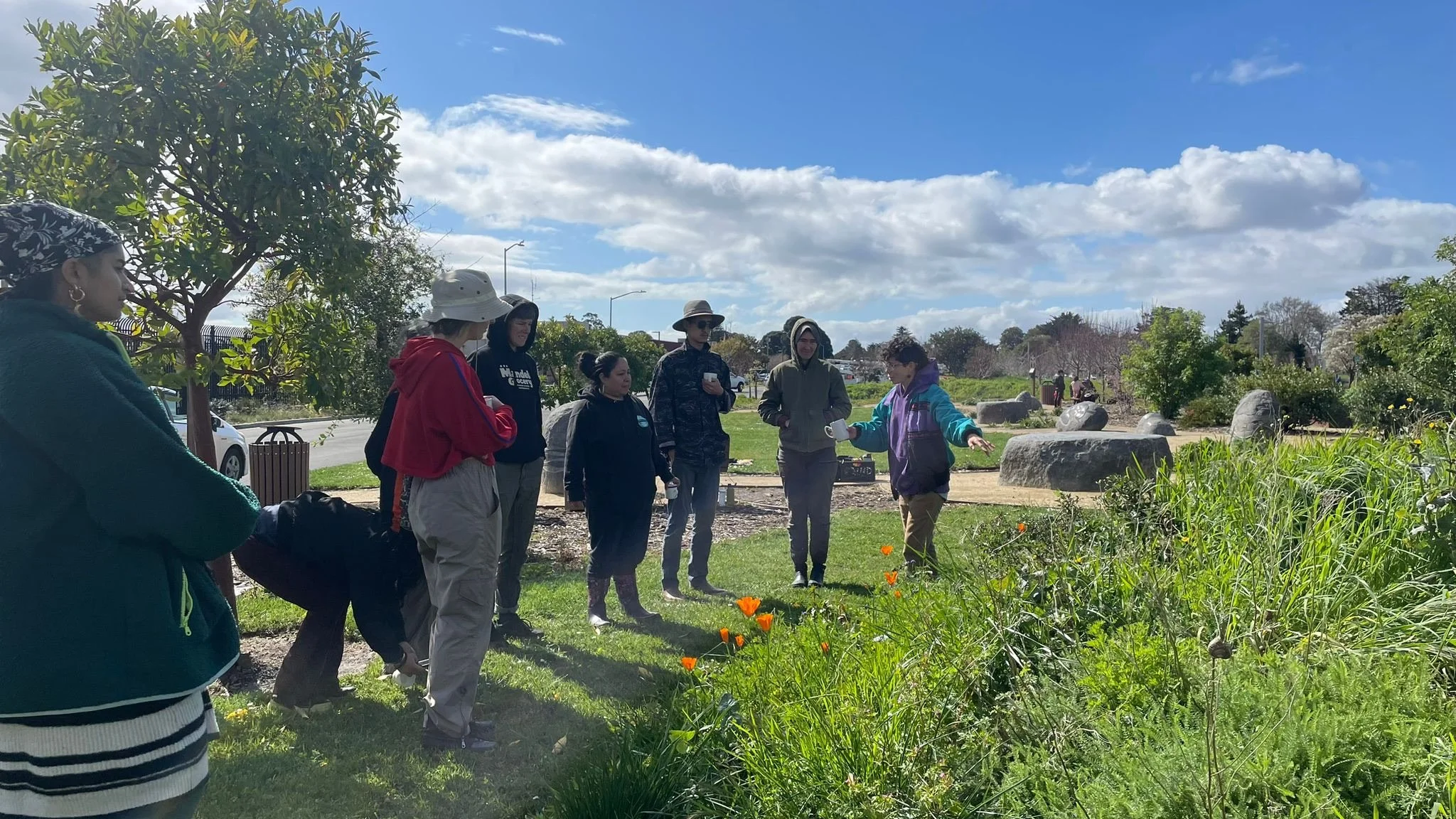
We had the great honor of being hosted by the beloved Deja Gould in tending to ‘Ookwe Park, the first park returned to the care of the Confederated Villages of Lisjan and Sogorea Te’ Land Trust through a collaboration with the City of Richmond and the Richmond Arts and Culture Commission. One of the underlying intentions of Transforming “Invasives” has been to cultivate space for those of us who come from diasporic lineages to see ourselves reflected in the landscape, and to prayerfully and playfully nuance the ways we show up in indigenous solidarity. It’s a gift to have the opportunity to directly serve the indigenous leadership of the land we are guests on by tending to ‘Ookwe.
This site is a bit different from our previous experience; rather than the overwhelming dominance of a single nonnative plant, ‘Ookwe is host to a diversity of different nonnative “weeds” that we’ll be encountering. There are, however, a few Atropa Belladonnas aka “deadly nightshades” that we’ve been specifically asked to remove; for those who are curious and brave, we honed in on the medicines, messages, and folklore around this plant.
Special thanks to Deja, Bernadette, Frida, Amne and the crew from Sogorea Te for hosting us on the lands you tend. We could feel all the creativity and prayer that has gone into reclaiming this land right next to a sacred shellmound.
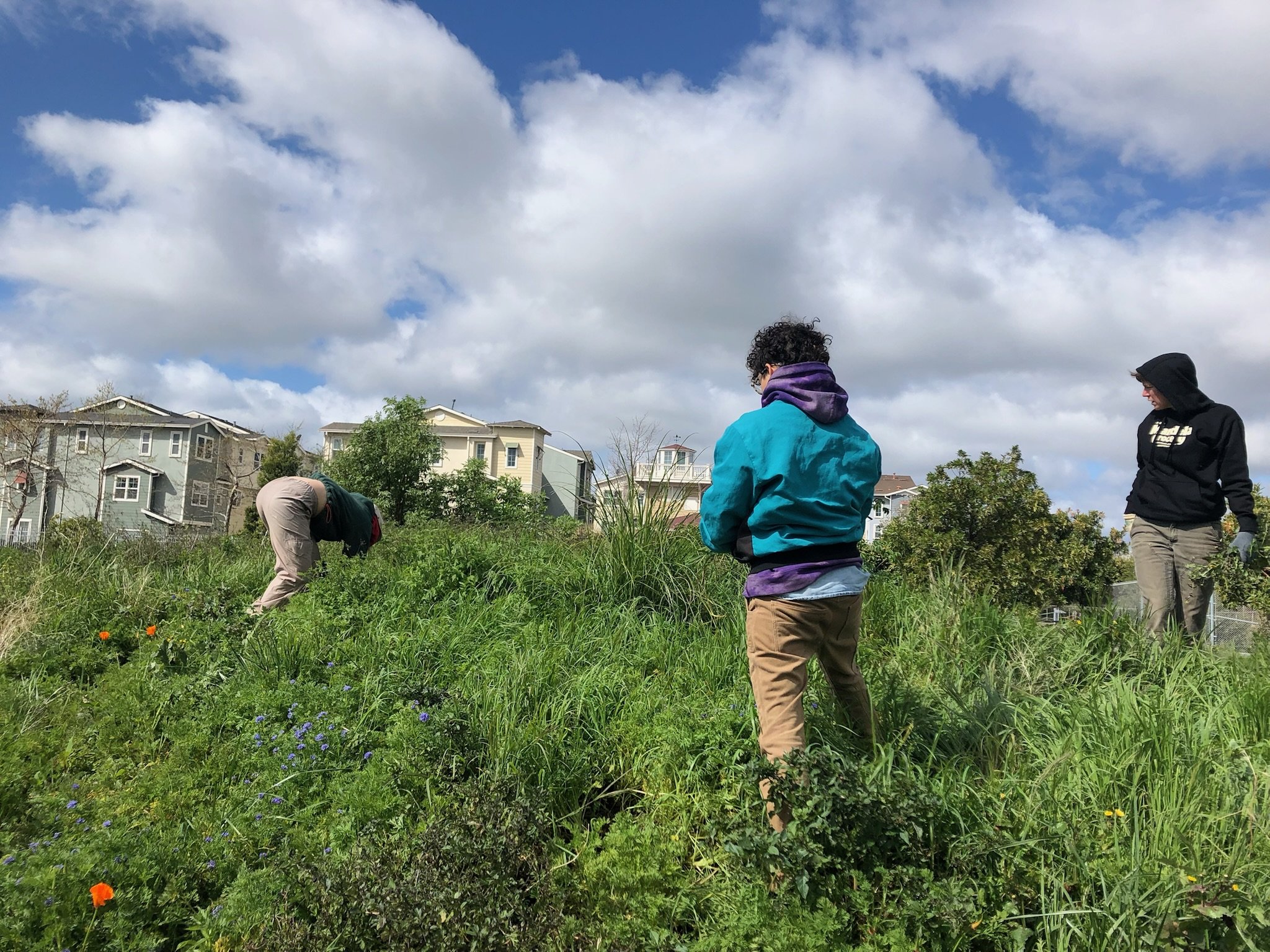
Some learnings and noticings we harvested during our time together:
Atropa Belladonna is native to Europe, North Africa, and the Mediterranean, and was brought here by the witches who cultivate ki.
Belladonna can be made into deadly poison, a psychedelic trance inducing elixir, a flying ointment, and is a component in many modern pharmaceuticals as a pain reliever, muscle relaxer, and anti-inflammatory medicine.
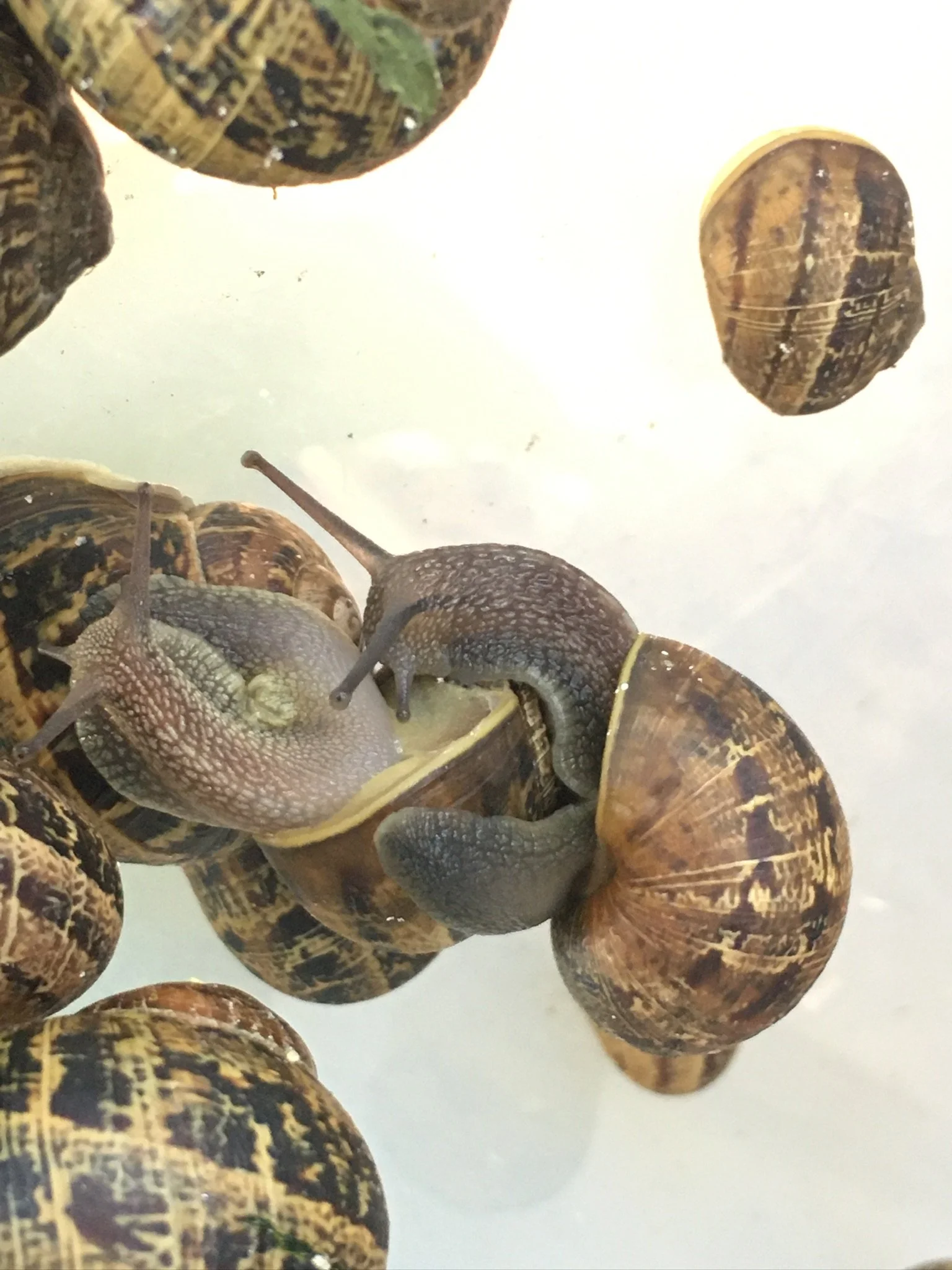
Snails were exclusively predating on the nonnative plants at ‘Ookwe, as if to say “Slow down!” to the opportunistic newcomer plants who were rushing to take up nutrients and space.
The native and nonnative plants had their root systems tightly interwoven, which made it challenging to remove just one without damaging the other. Together they reflected to us the complexity of our interconnectedness.
The secret names that came to us were: Snail Snacks, Purepil (they dilate pupils), & Boundary Berry
Belladonna has been our most elusive and challenging plant friend yet, given how the medicinal uses are hard to access, shadowed by the intimidating poisonous boundaries.
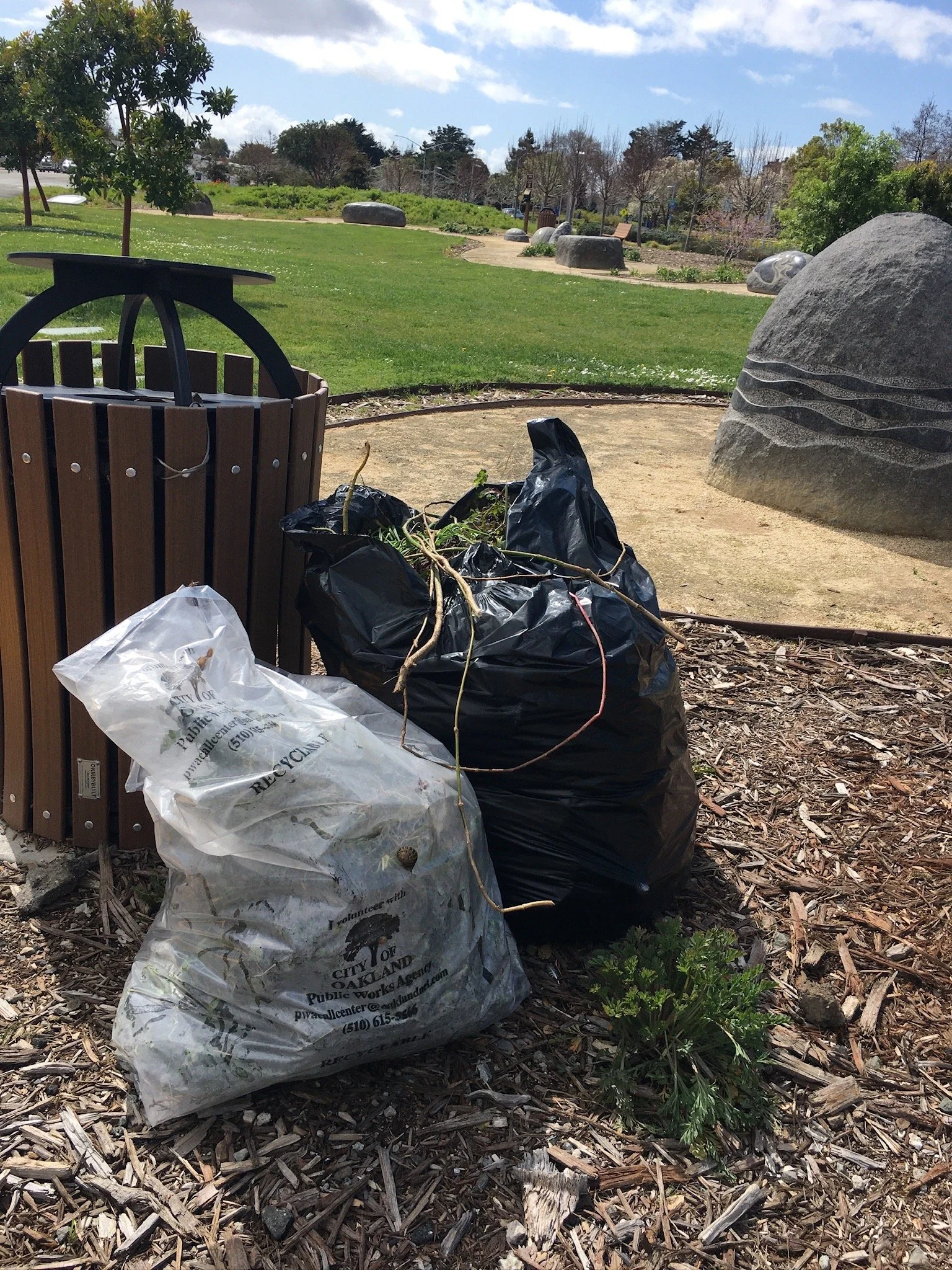
In an effort to minimize the potential for poisoning and intoxication, we were invited to bag up the belladonna we uprooted - which was later sent to the landfill.
Thankfully, the snails allowed us to enact our aspiration of honoring these plants through use. Bernadette talked us through the process of cleansing their systems (of the poison they’d been consuming) so that they can be eaten. Inspired by escargot-eating French ancestors, Oona has been tending these snails into culinary readiness.
On our drive up to the site, we channeled a song that invites in wonder and awe for the plants as we uproot them. It was beautiful to harmonize with the land and with our actions through this song. It’s a zipper song (aka fill in the blank) calling us to sing out what the plants bring to the system we stand in, their role, and any curiosities we have about them.
“Invasive plants
Asking us for a chance
To finally be seen
For the ~ ~ that you bring
And as I pull you out
I pause and think about…
~ ~ ~ ~ ~
(~ means fill in the blank with whatever comes to mind)
