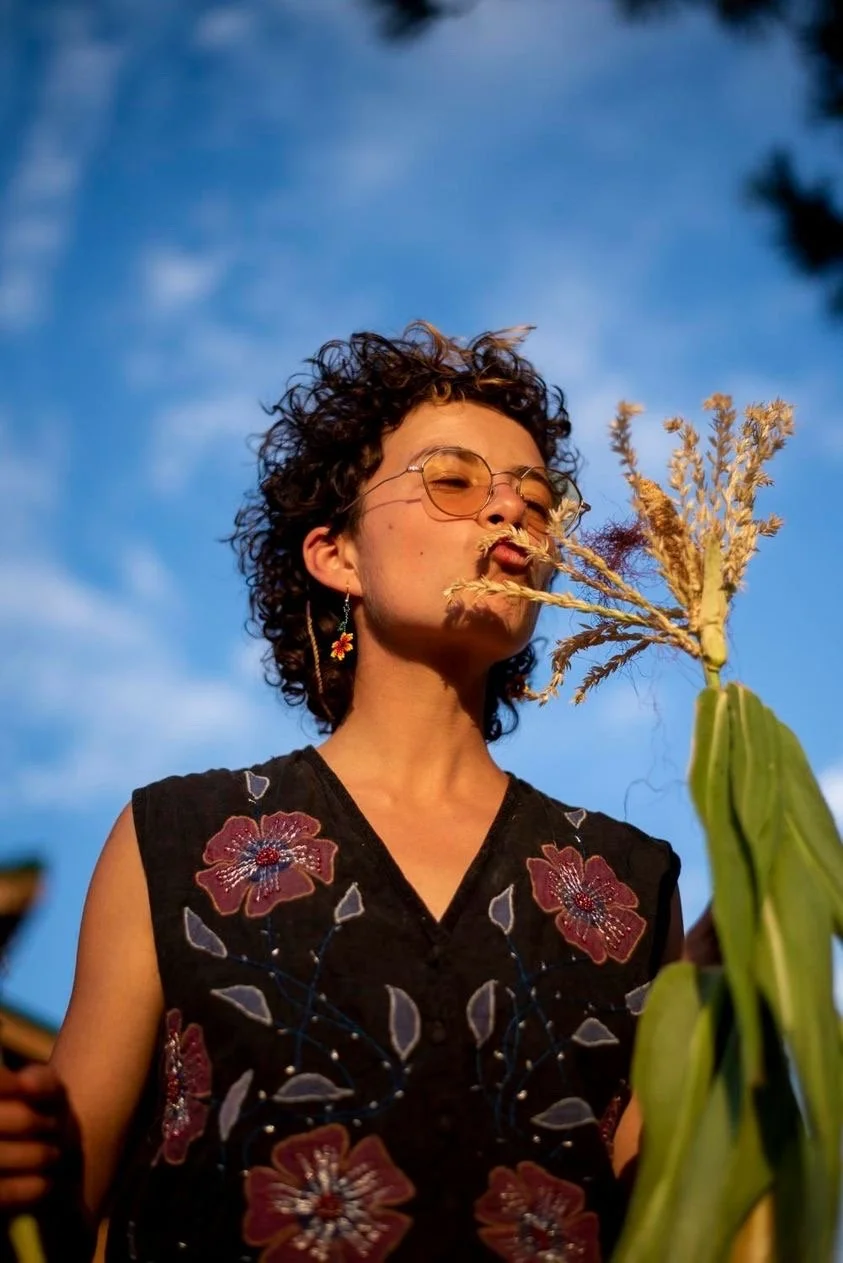
english ivy
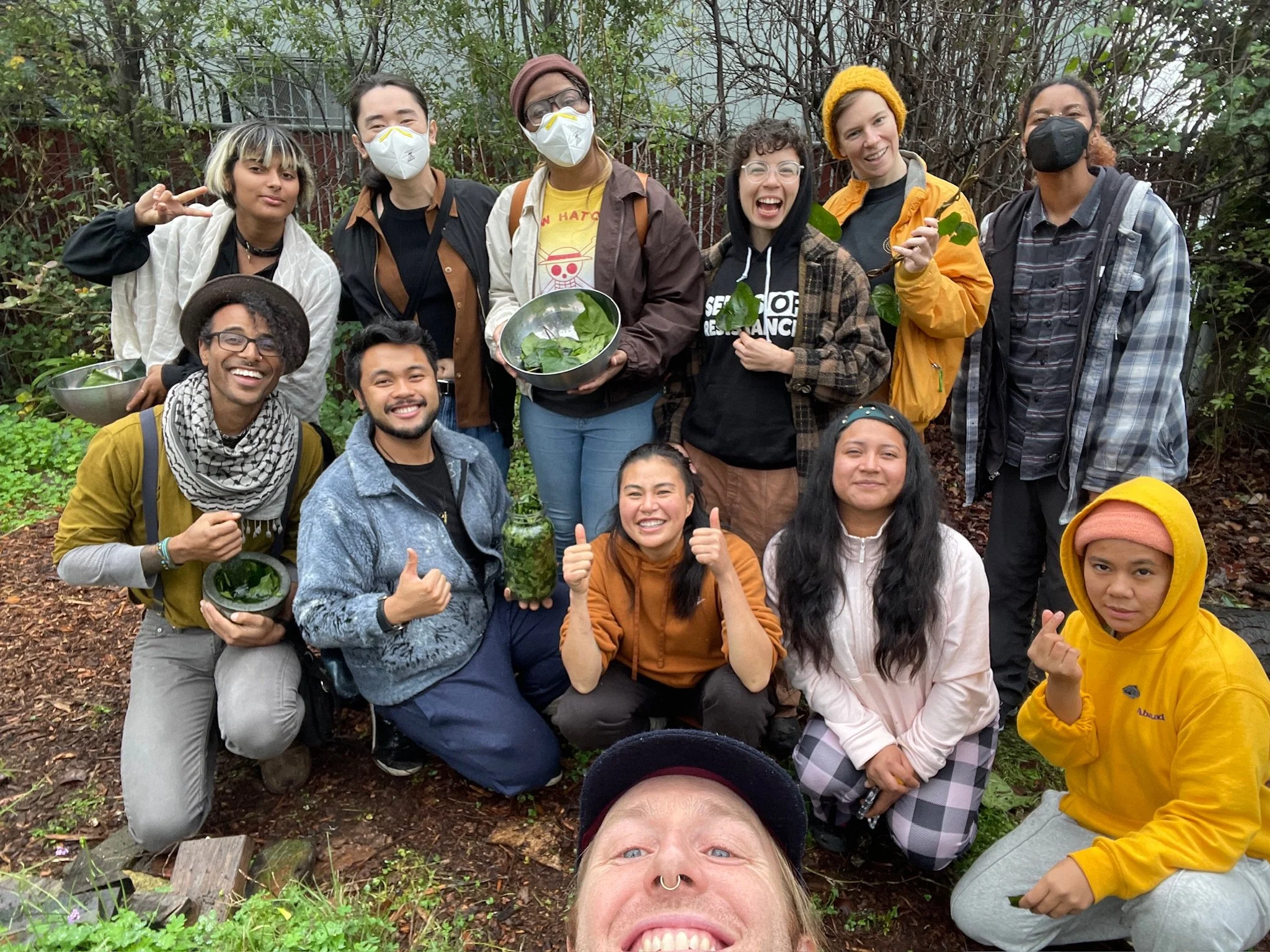
We’ve gotten to work with English Ivy during several session - both at Canticle Farm and a neighboring cooperative. In both sessions, we harvested and processed basketry materials from English Ivy, who is infamously gifted at covering both vertical and horizontal ground. You’ll often see them crowding out space for native and other plants who would do a better job of preventing erosion by holding the soil down with their roots. For our first session, Oona and Robin harvested ivy from a creekside redwood patch in Leona Heights, covering a lot of ground where you usually might find natives like mugwort, snowberry or rush. In our second session we disentangle ivy from a near collapsing fence at the local cooperative’s backyard.
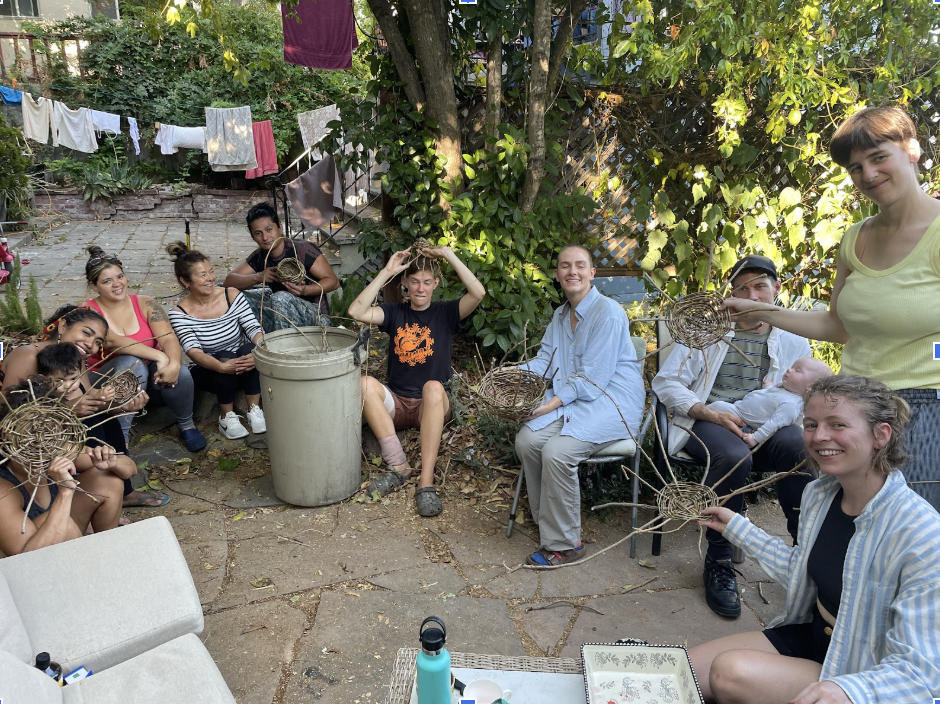
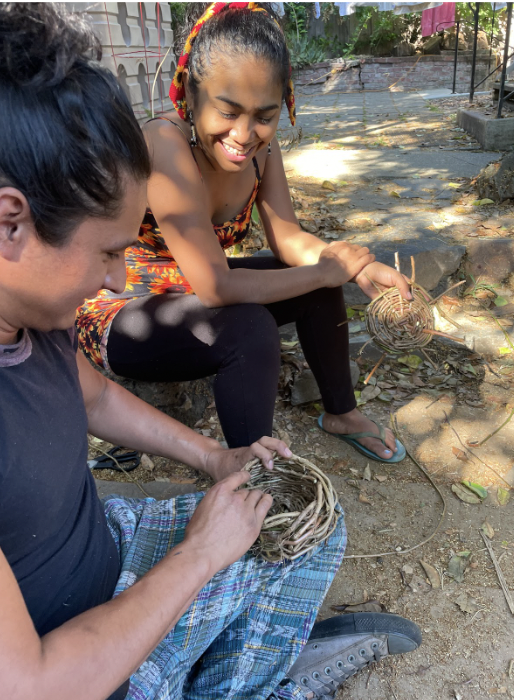
As we sat and wove baskets together, we paid homage to the spiders and their webs in the surrounding landscape, looking to them for inspiration as our fingers remembered the ancestral practices of twining and pinching. We sat and talked story - stories of rogue neighborhood crews who practiced a summer ritual of ivy removal from their local forest every summer, stories of horrific spider bites, stories of accidentally eating spiders and then becoming extremely gifted weavers.
What’s English Ivy’s role culturally and ecologically?
We reflected on the ways that ivy has been adopted as a status symbol (think “ivy league”), and conjectured about ivy’s secret ploy to slowly deteriorate buildings of power; the master’s tools may not be able to dismantle the master’s house, but the master’s plants sure can. English Ivy was first brought to Turtle Island by settlers in Virginia in 1800 - rumor has it that their intention was to bring ornamental plants that made them feel that familiar sense of home. As our mentor Annie would say in NVC language - a tragic strategy for an unmet need of belonging. We can wonder all day about their intentions, but we know for sure the intense intergenerational impacts.
We looked back to English Ivy’s ancestral significance within the Celtic Ogham calendar - which celebrates ivy for its ability to create life amidst dead and dying structures, for its adaptability, for the ways ki connects beings across distance.
Ivy leaf is also an ally to respiratory systems when taken as a tea. It’s known to clear out the lungs by stimulating mucus glands and have expectorant properties. This helps reduce swelling and blockage of airway passages. It’s profound that in order to clear the mucus, ivy stimulates mucus production - just as some physical and cultural illnesses need to be surfaced in order to be addressed!
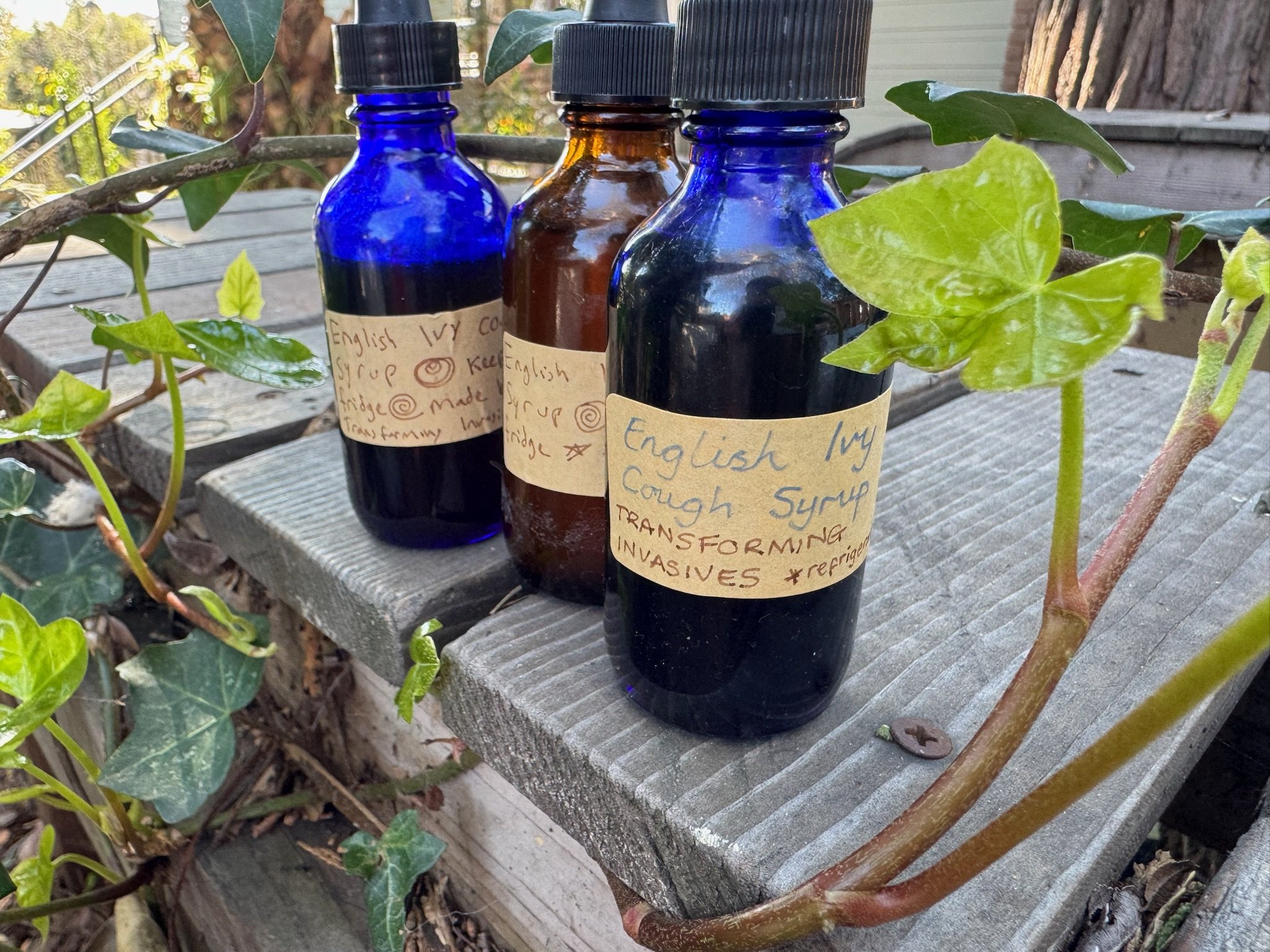
The medicine that was processed from our second Ivy session was sent down in a care package to Native wildfire fighters in LA, to support their respiratory systems and build the energetic bridge of solidarity during these times of compounding ecological crisis.
cultural offerings
As mentioned, we wove baskets that we used to hold medicine gifts from our various experiments.
For our second session, we brought out the loop pedal to make a song tribute to English Ivy as we processed ki into respiratory medicine - looping some of the “secret names” that emerged through the collective.
Using the framework of the game “fortunately, unfortunately”, in which the group collectively tells a story, with each person rotating the beginning of their story addition with either the phrase “fortunately” or “unfortunately”, we wove a tale about English Ivy - embracing the complexity of it’s destructive “invasive” nature, and the medicines it bears.